Boston Ivy Care: How To Grow And Care For Boston Ivy
Boston ivy is a decorative vine that grows well on walls and the sides of buildings. With its glossy green leaves, blue fruits, and fiery fall colors, it's the ideal ornamental covering for a drab wall or a rundown shed. The vine looks its all-time confronting rock buildings although it will encompass all types of buildings with the same exotic panache. Not to mention the free energy savings it offers every bit information technology helps continue the building warm in the wintertime and cool in the summertime.
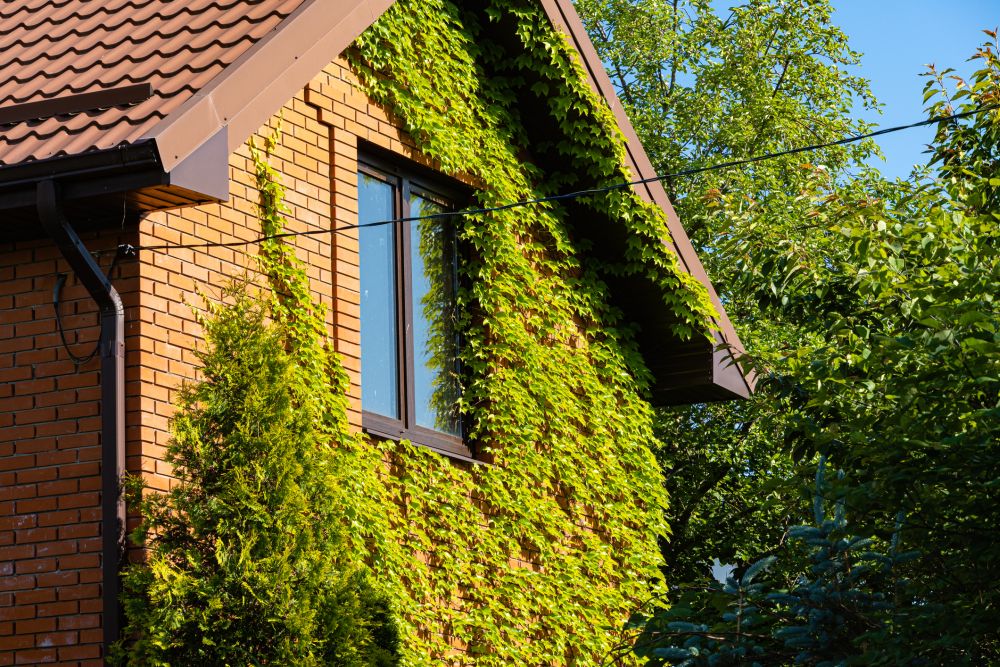
Unlike other ivy species, information technology doesn't cause whatever damage to the walls it attaches itself to. That's because information technology glues its tendrils to the surface of the wall with adhesive tips rather than penetrate the walls with aerial rootlets the manner English ivy does. That makes Boston ivy safe to grow near to walls and other structures. Read more to know how to commencement this peculiar ivy from seeds and how to accept care of it all yr round.
All About Boston Ivy
Boston Ivy (Parthenocissus tricuspidata) is a perennial deciduous vine that hails originally from Japan. Just it has taken the world by storm mainly because it doesn't pose any danger to the buildings information technology climbs. Its ornamental backdrop besides helped propel information technology to the top of the list of the popular ivy species to abound.
Although this ivy is considered an invasive constitute, it behaves itself when planted in a controlled setting. So there's little risk of having the vine grow out of manus or spreading all over the building. Regular pruning and some vigilance are required to proceed the vine under command.
As a cool climate vine, information technology's more than suited to zones iii to 9. Information technology'southward not recommended to abound information technology in warm zones above nine. At the top of the growing flavor in the summer, the ivy tin can attain up to l feet. But subsequently it sheds its leaves in the tardily fall, the skeleton vine will give up all the space it used to cover.
The leaves are ovate and broad, growing to about three inches wide. They beginning as green in the spring and larn a glossy sheen in the summer earlier turning total cerise-cherry in the fall. That's in contrast to the rather humble greenish-whitish flowers that make a brief advent in mid-summer. Merely when you lot have showy foliage like that, who needs flowers?
After pollination, bluish berries supersede the flowers. They grow in clusters with each berry containing betwixt ane to three seeds inside.
Boston Ivy Varieties
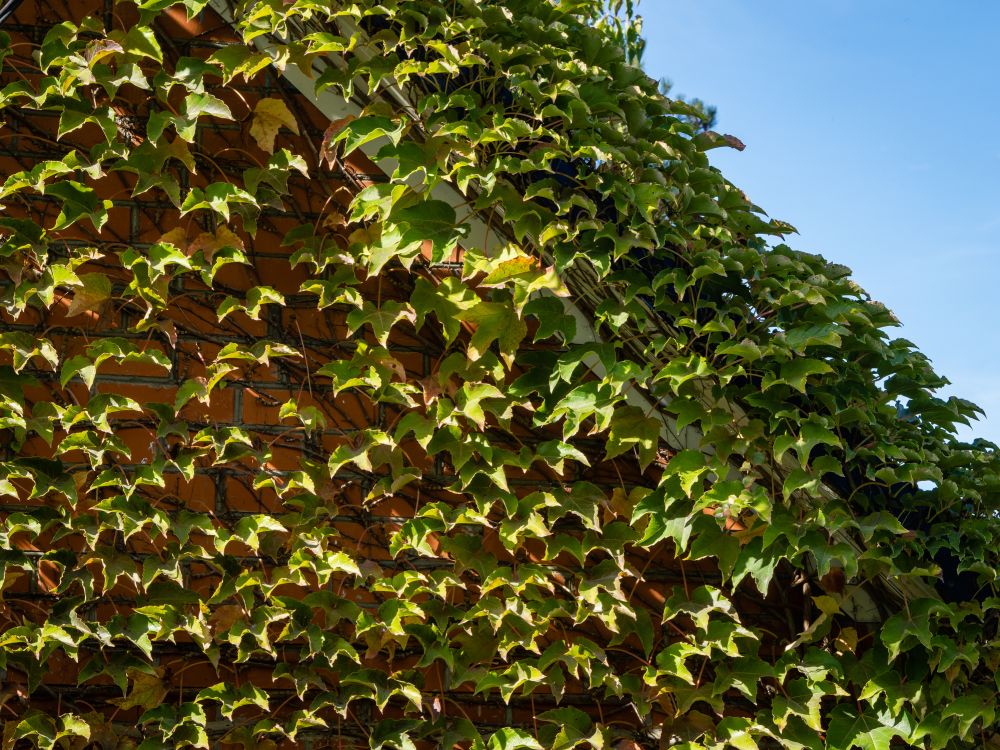
Every bit shortly as Boston ivy appeared on the stately mansions of Boston, Massachusetts, and Dallas, Texas, more varieties popped upwardly everywhere else. Hither nosotros'll cover the most popular ivy cultivars that have made a proper noun for themselves and y'all're nigh likely to run across growing on suburban homes in your neck of the woods.
- Calcazam: A relatively new cultivar that made its first advent in 2009. It has variegated leaves which start off with pinkish shades. The stems too take pinkish spots although mature vines tend to revert back to their solid green colors. Information technology has a fast growth rate and gains betwixt vi to 10 feet every year. Information technology but needs a few years to cover up the whole building.
- Ginza Low-cal: Originally from Nihon where information technology was named afterward the Ginza suburb in Tokyo. It has smaller leaves with permanently variegated colors. That means that the patterned leaves will keep their patterns until they fall. Although some nurseries in California still grow it, the cultivar is considered rare in the United States.
- Fenway Park: The leaves of this cultivar announced to exist glowing. The bright calorie-free greenish color reflects the lite and shimmers under the sun. In the fall, all leaves plow purple-red before shedding in the tardily fall or early on winter.
- Purpurea: One of the oldest Boston ivy cultivars in the US. It dates back to 1903 and has stunning purple-light-green shoots that turn bright greenish every bit the leaves mature. But it'south in the fall that the vine'due south true colors show. Instead of the regular crimson-ruddy, the leaves turn purple-maroon.
- Lowii: Too known as Trivial Leaf, this cultivar doesn't tend to cover walls and buildings. Rather, it contrasts its small dark-green leaves with the natural colors of the building behind it. In the autumn the one-inch leaves plow a deep cerise. Other features include entwining branches which farther limit the ivy's spread and coverage area.
How to Grow Boston Ivy
Although Boston ivy is a cultivar, starting it from seeds is still the best manner to approach this vine. The chances of germination are loftier and for all intents and purposes, the new vine will grow identical to its parent. Here's how to collect the seeds from a mature plant and start them in your own garden.
- Monitor the berries of the mature ivy until they plow nighttime bluish and become squishy. They're ripe and ready to harvest.
- Place the ripe berries on a plate and trounce them with your hands to extract the seeds. Don't damage the seeds in the process.
- Launder the seeds under running h2o then place them in a bowl full of warm water. Keep them for 24 hours to soften the shell.
- Strain the seeds and spread them on a paper towel to dry out.
- Once they're dry, put wet sand in a few plastic numberless and drib the seeds in the bags. Continue them in the fridge until side by side bound. Don't let the sand go dry.
- Afterwards the concluding frost, wait for the soil temperature to rise to 55 degrees Fahrenheit then turn the summit 8 inches of the soil with a spade.
- Mix in organic materials and compost with the soil then rake it.
- Take the seeds out of the refrigerator and grit off the sand attached to them.
- Plant the seeds a half-inch deep into the soil then encompass them with a thin layer of dirt.
- Water the seeds to get the soil moist. Keep it moist until the seeds germinate.
Boston Ivy Intendance
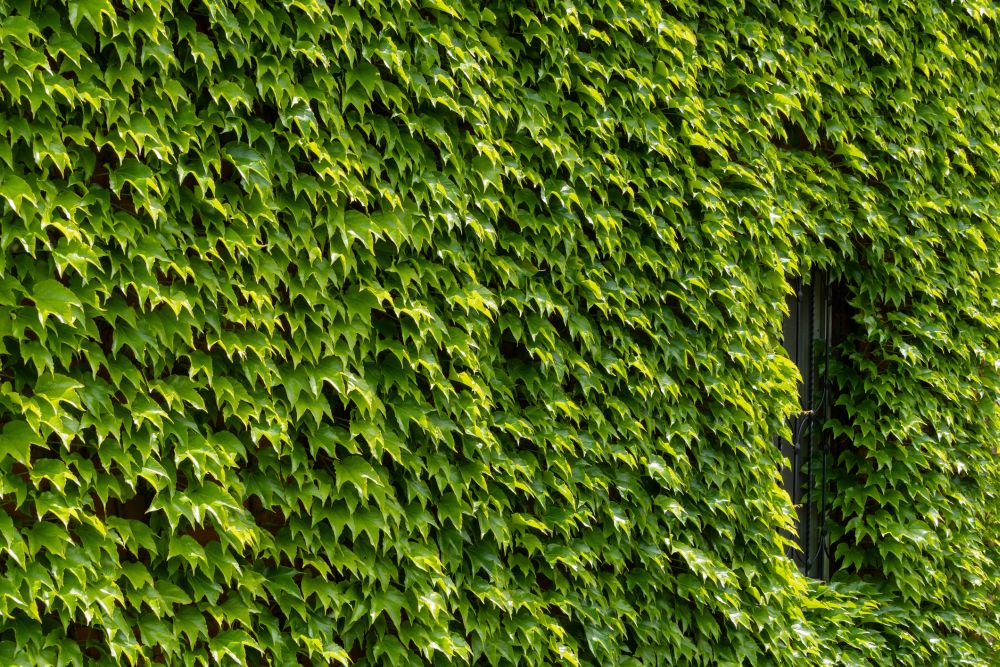
Since it'southward categorized equally an invasive establish in many states, you'll need to keep a watchful heart on your Boston ivy. It has a tendency to spread out and self-seed in the wilderness. 1 easy mode to control information technology is to deadhead the not-showy flowers before they pollinate. Or you can wait for the leaves to autumn then collect the unripe berries and dispose of them safely. Other than that, the vine needs little in the fashion of care and maintenance.
Soil
Boston ivy is non very picky when it comes to the soil y'all plant information technology in. It prefers loamy soil like most other plants growing in your garden. Only if you accept sandy or fifty-fifty dirt soil, that volition not hinder its growth or diminish its beauty in any way. The aforementioned applies to soil pH. The ivy has a high tolerance for both slightly acidic and alkali metal soil. Equally long as the soil is well-drained, you won't have an event with the vine. Neither fumes nor air pollution hinders the ivy from blossoming in urban settings.
H2o
Before it establishes, the Boston ivy needs a lot of water. So during the first yr, go on the soil moist and don't allow it dry out. Water the vine securely in the morn hours to help the roots develop. After the first year, the plant needs less h2o. Y'all can let the topsoil become dry between waterings. On average, watering information technology once a calendar week should be fine during the growing season. Less and then in clay soil or if the atmospheric condition is not also hot. After the vine sheds its leaves in the fall, cut back watering to once every 4 to 6 weeks.
Light
Plant your Boston ivy in full dominicus or partial shade. The sunlight is not a necessity for the establish's growth. And since the flowers are lackluster, to say the least, yous won't miss much if the vine doesn't produce blooms. However, come fall, the leaves will not put on a good show of colors unless they accept soaked upward the sun all summertime. That said, too much sunday, especially in warm zones, is not a good affair. So position the vine on a wall facing the northward or east to escape the hot afternoon sunday.
Fertilizer
The leafage of the Boston ivy is its principal describe. And that should tell you all you need to know about feeding the vine. In the leap, side-clothes it with a custom 10-5-10 fertilizer high in nitrogen. This volition trigger a growth spurt and fortify the ivy confronting pests and diseases. Apply the fertilizer once every 3 weeks. In the fall, use slow-release fertilizers to boost the growth of the roots equally the establish goes dormant.
Winter Intendance
In the belatedly fall, even though the Boston ivy appears dormant after shedding the last leafage and dropping the concluding squishy berry, information technology still needs some maintenance to fix it for the coming winter. That usually involves cutting the vine back. The best fourth dimension to prune the ivy is in the winter. This helps the plant preserve its resource. You can besides prune it any time you deem necessary. If the branches cover windows or doors, you tin can cut them away even in the middle of the growing flavour. This will non impact the vine or harm it. Only don't prune it deeply since that could slow its growth the next season.
Toxicity
While the Boston ivy doesn't have toxic chemicals per se, information technology is yet dangerous to handle both for humans and pets. The leaves and berries have considerable amounts of oxalate crystals. The crystals are similar shards of glass that lodge themselves in the oral fissure and throat of any fauna or human unfortunate enough to eat them. Symptoms include nausea, pharynx pain, vomiting, and excessive drooling. Medical help is required. Sometimes even touching the ivy leaves with your bare easily can cause peel irritation. So ever article of clothing protective gloves and eyewear when pruning or interacting with the ivy.
Pests and Diseases
Oxalate crystals aside, the branches and leaves are nevertheless attractive to a whole bunch of pests. These include beetles, leafhoppers, and eight-spotted foresters. But it'south the scale that you demand to watch out for. The tiny insect attacks the leaves as soon as they emerge in the spring. Infected leaves plough yellow in the summer and die before the fall. Signs of calibration infestation include scabby lumps on the underside of the leaves and branches. Spray the vine with neem oil to eliminate the stubborn pest.
The most common diseases that affect Boston ivy are powdery mildew, canker, wilt, leaf spots, and downy mildew. Most fungal infestations are caused past high humidity and lack of air apportionment around the vine. Pruning volition amend ventilation as well equally removing debris and weed will deter insects that carry pathogens from attacking the vine.
Source: https://www.diys.com/boston-ivy/
0 Response to "Boston Ivy Care: How To Grow And Care For Boston Ivy"
Enviar um comentário